

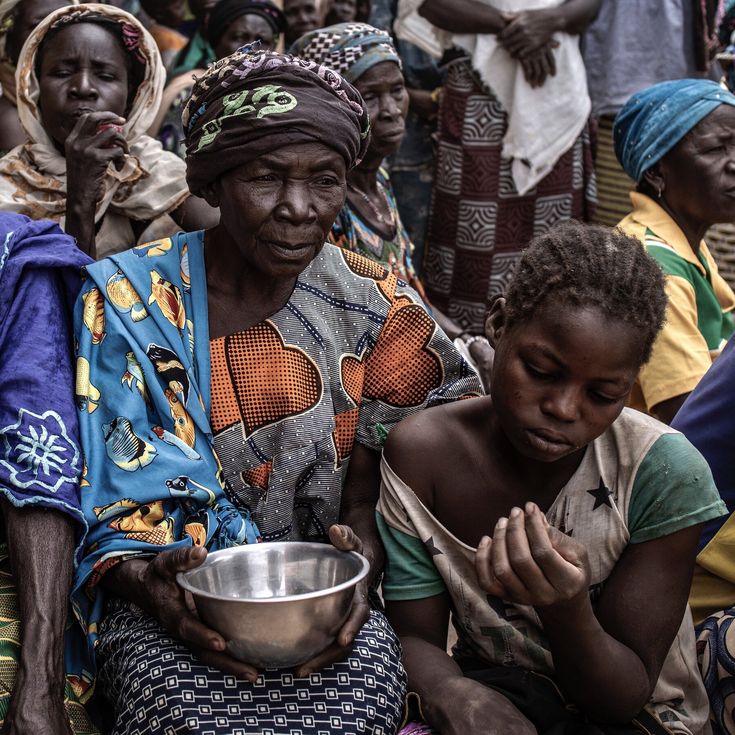
Food security is often viewed as an agricultural issue, but in reality, it is one of the most important responsibilities of the government. A nation's ability to feed its people is directly linked to its economic stability, national security, public health and social cohesion.
Ensuring access to affordable, nutritious food is not simply a welfare issue—it is a strategic national priority.
In recent years, food insecurity has emerged as one of the Nigeria's most pressing national challenges. Escalating insecurity, inflation, climate-related disruptions and declining agricultural productivity have combined to create a crisis that affects every Nigerian, regardless of location or income level.
The growing food crisis demonstrates why food security must no longer be treated solely as an agricultural issue. It should be recognised as a national priority that sits at the heart of Nigeria's economic development, national security and social stability.
Nigeria's Food Security Challenge
Food security means ensuring that everyone has reliable access to sufficient, safe and nutritious food at all times. Unfortunately, this remains out of reach for millions of Nigerians.
Over the past few years, food prices have risen sharply, placing enormous pressure on households. Many families now spend a significant portion of their income on food, while others are forced to reduce the quality and quantity of the meals they eat.
At the same time, insecurity has made it increasingly difficult for farmers to cultivate their land, particularly in many rural communities across northern Nigeria, where attacks, displacement and fear have disrupted agricultural activities.
The result is lower food production, reduced market supply and persistently high food inflation that continues to erode the purchasing power of ordinary Nigerians.
Food Security Is National Security
No country can achieve lasting peace and prosperity if it cannot feed its people.
When farmers are unable to access their farmlands because of insecurity, agricultural output declines. When communities are displaced, food production suffers. When transport routes become unsafe, food cannot move efficiently from farms to markets.
These challenges not only increase hunger but also weaken economic growth, fuel inflation and create conditions that can deepen social instability.
Protecting farming communities and securing agricultural production should therefore be regarded as a core national security responsibility.
Agriculture Is Key to Nigeria's Economic Growth
Agriculture remains one of Nigeria's largest employers and has the potential to drive economic diversification, create millions of jobs and reduce dependence on imports.
However, unlocking this potential requires sustained investment.
Nigeria needs policies that expand irrigation, improve rural roads, strengthen agricultural extension services, encourage mechanisation and provide farmers with better access to quality inputs, affordable financing and profitable markets.
Supporting smallholder farmers—the backbone of Nigeria's agricultural sector—will not only increase food production but also improve rural incomes and stimulate economic activity across the country.
Why Food Inflation Continues to Rise
Food inflation remains one of the biggest challenges facing Nigerian households.
While global economic pressures and climate change have played a role, domestic factors continue to have a significant impact. Insecurity, poor infrastructure, high transportation costs, post-harvest losses and limited investment in agriculture have all contributed to rising food prices.
Addressing inflation therefore requires more than monetary policies. It requires increasing domestic food production, strengthening supply chains and making agriculture more productive and resilient.
The Need for Long-Term Solutions
Temporary interventions can provide short-term relief, but they cannot solve Nigeria's food security challenges permanently.
The country needs a comprehensive national strategy that prioritises:
- Securing farming communities and agricultural corridors.
- Expanding irrigation to support year-round farming.
- Revitalising abandoned agricultural infrastructure.
- Investing in storage facilities, warehouses and cold-chain systems.
- Reducing post-harvest losses.
- Improving rural transportation networks.
- Supporting agricultural research, innovation and extension services.
- Strengthening strategic grain reserves to improve resilience during periods of economic hardship.
These measures would not only improve food availability but also create employment, reduce inflation and strengthen Nigeria's economy.
Why Food Security Should Be a National Policy Priority
Food security should be integrated into Nigeria's highest levels of policy planning because it directly affects national development.
A country where farmers cannot farm safely, where families struggle to afford food and where agricultural productivity continues to decline cannot achieve sustainable economic growth.
Making food security a national priority means recognising that agriculture is not merely another sector of the economy—it is the foundation upon which economic stability, public health and national prosperity depend.
Leave a reply
Recent Post









Comments (0)