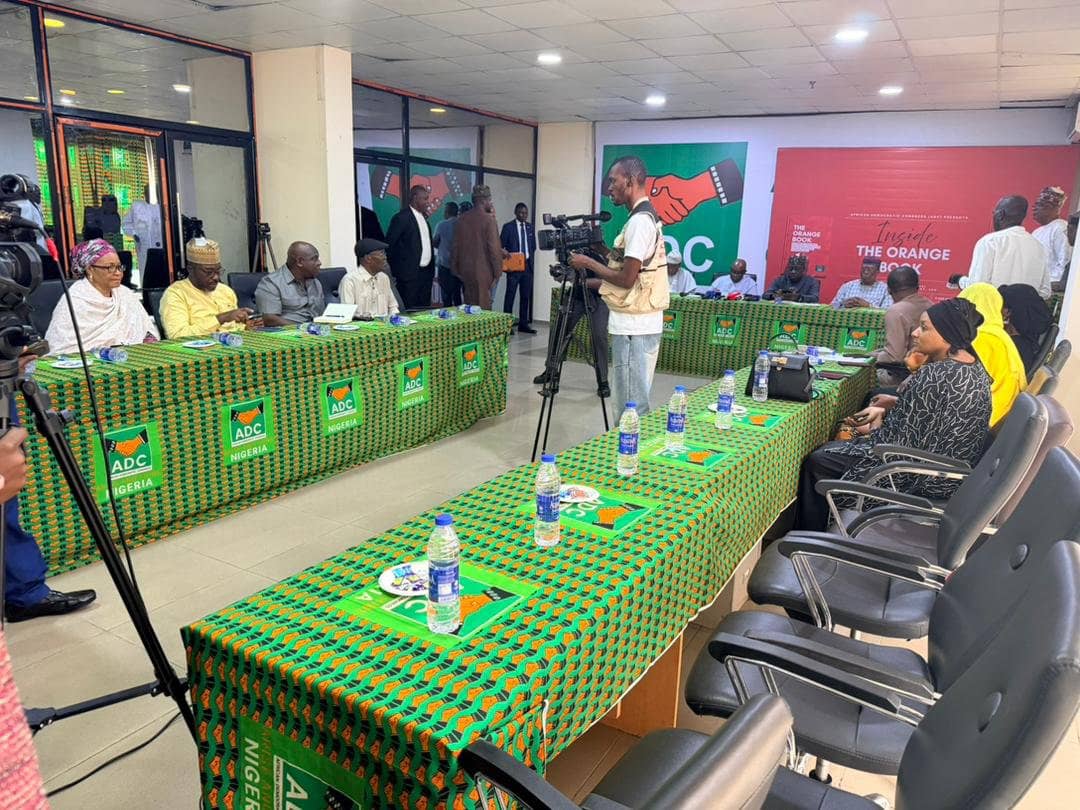
The African Democratic Congress (ADC) has inaugurated its National Reconciliation and Peace Committee as part of efforts to strengthen unity ahead of the 2027 general elections.
The committee, chaired by former Senator Tunde Ogbeha, took the oath of office in Abuja on Wednesday, September 2, 2026, ahead of the formal commencement of its assignment.
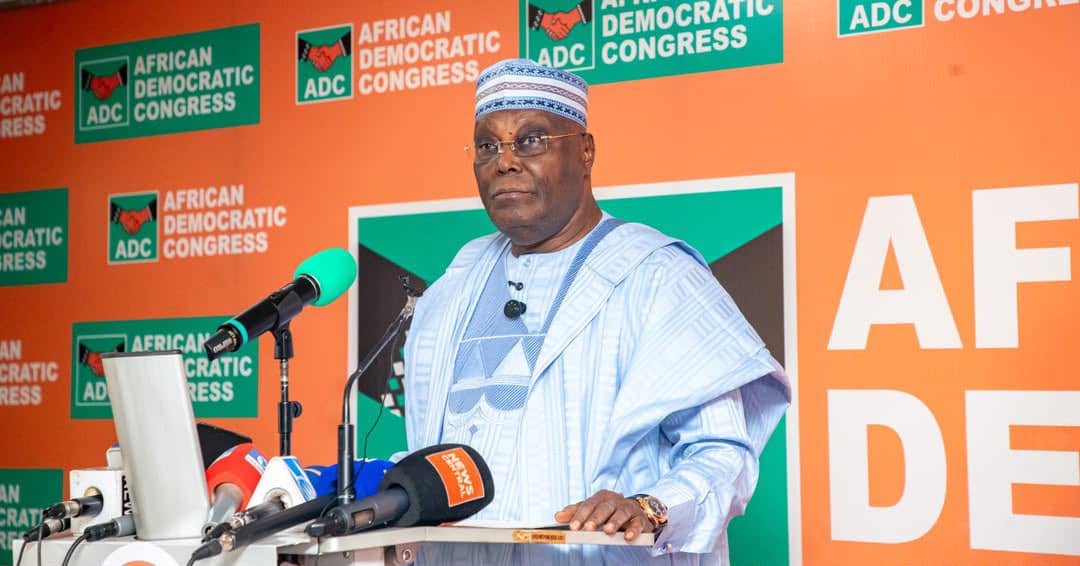
The inauguration was performed by the National Chairman of the ADC, Senator David Mark, who said the reconciliation process was necessary to rebuild trust, strengthen internal cohesion and ensure that members of the party remained valued and included.
The development comes after the party’s recent primary elections, which produced candidates for various elective positions but also generated disappointments and grievances among some aspirants and their supporters.
David Mark: Election Victory Must Not Divide the Party
Speaking at the inauguration in Abuja, Senator David Mark said the ADC must address internal disagreements in a manner consistent with the principles on which the party was founded.
He said the ADC was built around democracy, inclusion, justice and consultation, as well as what the party describes as its “Handshake Philosophy” of building bridges across differences.
According to Mark, the outcome of an internal election should determine who carries the party’s flag, but should not determine who remains a valued member of the ADC.
He emphasised that aspirants who did not secure tickets still possess valuable experience, political networks, structures and commitment that can contribute to the party’s broader objectives. He also urged successful candidates not to regard electoral victories within the party as a licence to exclude, humiliate or marginalise fellow contestants.
Mark described the party’s broader challenge as building a united political platform capable of earning the confidence of Nigerians ahead of the 2027 elections.
The National Chairman also appealed to aggrieved members to give reconciliation an opportunity, while calling on successful candidates, unsuccessful aspirants and party leaders to play constructive roles in rebuilding trust.
Tunde Ogbeha to Lead Reconciliation Effort
Senator Tunde Ogbeha was named chairman of the National Reconciliation and Peace Committee, with former Edo State governor Professor Oserheimen Osunbor serving as deputy chairman.
Other members reported as part of the committee include Dr Ahmad Ajuji, Barrister Musa Elayo, Senator Andrew Uchendu, Dr Bon Unachukwu, Mr Kunle Ige, Hon. Hajia Rabi Sule and Hon. Abubakar Kanike.
Peter Oyewale, Esq., was named secretary, while Isaac Dare Oketade serves as deputy secretary. The committee will also work with six zonal legal advisers who are expected to liaise with the committee within their respective zones.
The composition brings together party figures from different parts of the country as the ADC seeks to manage post-primary grievances and reinforce its internal structures ahead of the general election.
Reconciliation Linked to ADC’s 2027 Strategy
The reconciliation initiative comes at a critical stage in the ADC’s preparations for the 2027 general elections, with the party seeking to maintain cohesion following its primary elections.
The committee is being established within the framework of the party’s constitution. Senator David Mark said the National Working Committee established the committee in accordance with the ADC Constitution, with reports identifying provisions relating to the party’s reconciliation responsibilities and its “Handshake Philosophy.”
For the ADC, the immediate task is to prevent disagreements arising from internal contests from weakening the party’s structures as preparations for the general election continue.
The party leadership has therefore framed reconciliation as an internal political process aimed at ensuring that both successful and unsuccessful aspirants remain part of the wider party structure.
Ogbeha: Party and National Interests Must Come First
In accepting the assignment, Senator Ogbeha said the committee would work to listen to grievances, heal divisions and rebuild confidence among members.
He said the committee understood the scale of the responsibility before it and pledged to carry out its work with due diligence.
Ogbeha further stressed that members should place Nigeria first, followed by the party, while individual interests should come last. He said reconciliation was not only about resolving disputes but also about strengthening the ADC’s ability to pursue its political objectives ahead of 2027.
The committee’s inauguration and the swearing-in of its members formally begin a process intended to address internal grievances and strengthen unity within the African Democratic Congress as the party moves towards the 2027 general elections.
The ADC leadership has continued to emphasise inclusion, consultation and internal cohesion as important elements of its preparations for the elections.
Leave a reply
Recent Post




Comments (20)
Obadiah Lumi Oba
13 Oct, 2026 at 08:35 AMGood morning sir & ma I need to register in ADA membership
DOMINIC OBINNA CHRISTIAN
12 Oct, 2026 at 12:04 PMAM A FULL MEMBER OF ADC..I HAVE MY MEMBERSHIP CARD ALSO, MY POLLING UNITE IS IN 003 SECURITY OFFICE @ NOW FOR ORIZU COLLEGE OF EDUCATION NSUGBE IN WARD 2 IN ANAMBRA EAST L.G.A OF ANAMBRA STATE, PLEASE I REALLY WANT TO WORK AS AM COORDINATOR/ AGENT FOR ADC IN MY WARD & IN MY POLLING UNITE, THIS IS MY WATSAP CONTACT NO...08168061708, AM WAITING FOR REPLY & FEEDBACK THANKS.
Bala nazifi bazai
12 Oct, 2026 at 12:12 AMNigeria sai atiku
Abdurrazak tanimu
11 Oct, 2026 at 03:50 AMAlhamdulillah muna tare saidai mutuwatarabamu Adalci muke so
Abdurrazak tanimu
11 Oct, 2026 at 03:49 AMAlhamdulillah muna tare saidai mutuwatarabamu Adalci muke so
Abdurrazak tanimu
11 Oct, 2026 at 03:47 AMAlhamdulillah muna tare saidai mutuwatarabamu Adalci muke so
Hashimu
05 Oct, 2026 at 09:24 AMAdc
Ege Godwin
24 Sep, 2026 at 05:45 PMI thank almighty God for making a success we are going to be 2027 by his grace .
Betini Asuquo Afangide
20 Sep, 2026 at 07:59 PMTo my great ADC party family, I bring you good news, from,Akwa Ibom State including Nigeria - WE ARE READY,Akwa Ibom ADC is fully mobilized, united, and prepared to win. From Uyo to Eket, Ikot Ekpene to Oron, our structures are on ground and our people are hungry for change. We are not just participating, we are coming to WIN the 2027 elections. Akwa Ibom will deliver for ADC. PRAYER FOR ALL OUR CANDIDATES* Let us pray: Almighty God, we commit all ADC candidates into Your hands - from our Presidential candidate, to our Governorship, Senate, House of Representatives, and State House of Assembly candidates. Grant them wisdom, strength, protection and favour. Cover them and their families with Your blood. Let no plan of the enemy prosper against them. Lord, give us unity as a party, give us victory at the polls, and give us the grace to lead Nigeria and Akwa Ibom with justice, peace and prosperity. In Jesus name we pray, Amen
Isiya Abdullahi
17 Sep, 2026 at 11:16 AMAtiku alkiri
Isiya Abdullahi
17 Sep, 2026 at 11:15 AMIna Ra ayi
Kalli Sherukalli
16 Sep, 2026 at 12:51 PM1434765868 access Bank sharoo kalli Muhammad
Kalli Sherukalli
16 Sep, 2026 at 12:51 PMSherukalli Muhammad Muhammad Dan maiduguri
Ismail aminu
11 Sep, 2026 at 02:41 PMAlhmdllh
Abdullahi Ali Adam
11 Sep, 2026 at 01:37 PMI stand with A.D.C on till my life
Faruku Garba
08 Sep, 2026 at 02:46 PMCommunity service center of Honor society
Faruku Garba
08 Sep, 2026 at 02:43 PMCommunity service center of Honor society
Hamza Abubakar
07 Sep, 2026 at 03:51 AMHamzaabubakar
Hamza Abubakar
07 Sep, 2026 at 03:48 AMHamza abubakar for chairman local government yabo local government 2027 China mampartyna (1) yabo local government (2) duk radar mutare (3) Insha AII ah
Hamza Abubakar
07 Sep, 2026 at 03:26 AMHamzaabubakar yabo sokoto