
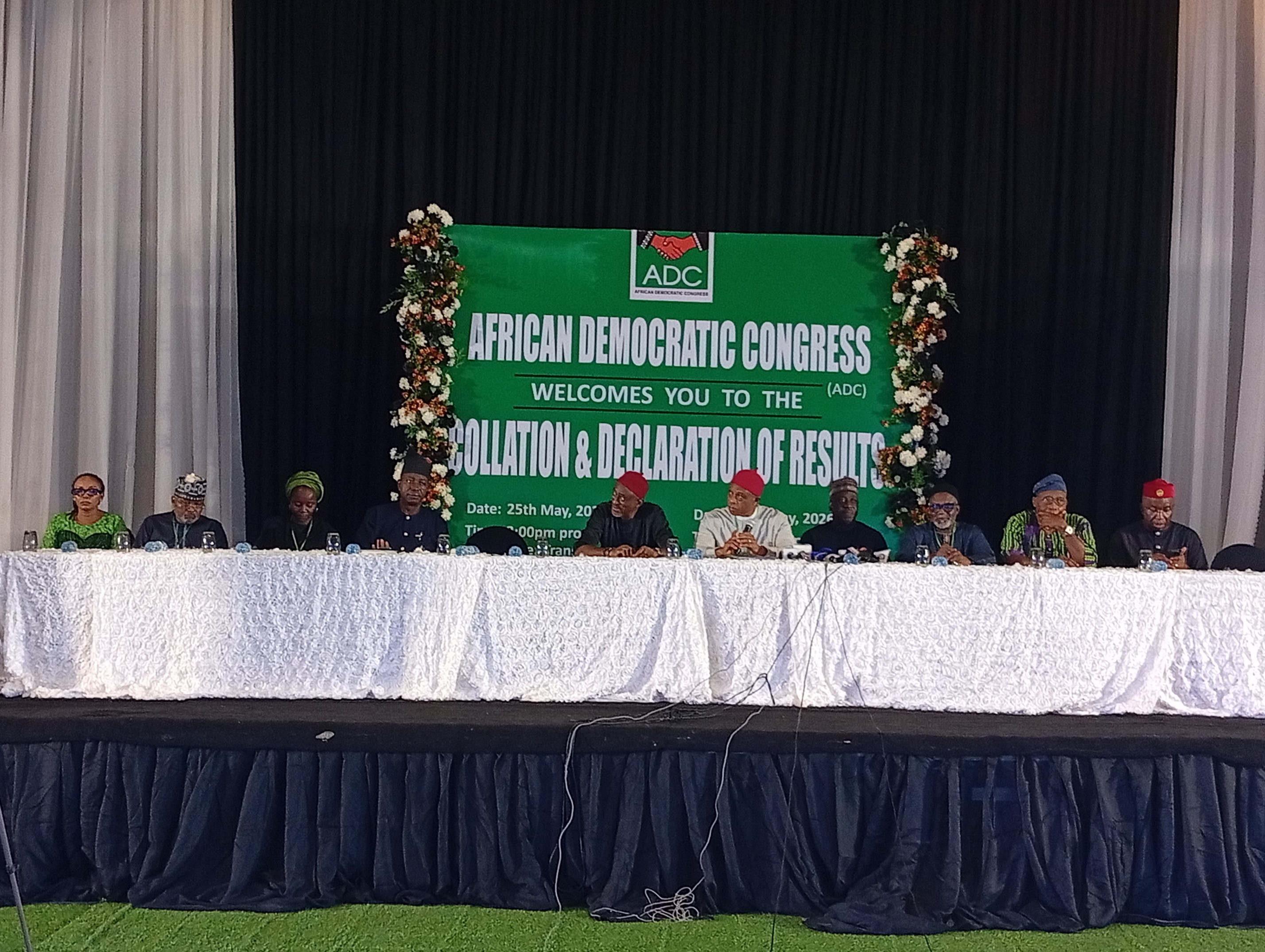
As Nigeria gradually approaches the 2027 general elections, the presidential primary election conducted by the African Democratic Congress (ADC) stands out as one of the most important democratic exercises in the nation’s recent political history. At a time when internal democracy within political parties has become increasingly weak, the ADC has demonstrated that democracy can still thrive through transparency, openness, competition, and respect for the will of party members.
Unlike several major political parties where only one dominant aspirant emerged unchallenged — making competitive primaries unnecessary — the ADC chose the more democratic path. Rather than impose a candidate or stage-manage a predetermined outcome, the party conducted direct and transparent presidential primaries involving three highly respected and eminently qualified aspirants. This decision alone sends a powerful message to Nigerians: democracy is strongest when leaders are chosen through open competition, not political coronation.
A Rare Example of Genuine Internal Democracy
Across Nigeria’s political landscape, many citizens have become disillusioned with the culture of imposition, backdoor consensus arrangements, and manipulated delegate systems that often characterize party primaries. In many cases, aspirants withdraw under pressure, while party members are denied the opportunity to participate meaningfully in the selection of candidates. The ADC’s approach offers a refreshing alternative. By allowing party members across the country to participate directly in the process, the ADC reaffirmed the principle that political power truly belongs to the people. The party’s Electoral Committee emphasized fairness, transparency, and accountability throughout the exercise, assuring Nigerians that every vote would count and every figure would reflect reality.
The significance of this cannot be overstated. For democracy to succeed nationally, democratic culture must first exist within political parties. A party that cannot conduct transparent primaries cannot convincingly promise transparent governance.
Three Eminent Aspirants, One Democratic Process
What further distinguishes the ADC primary is the caliber of aspirants who willingly submitted themselves to a competitive democratic process.The contest featured former Vice President Atiku Abubakar, former Rivers State Governor and ex-Minister of Transportation Rotimi Amaechi, and respected economist and former Chairman of the Nigeria Economic Summit Group (NESG), Mohammed Hayatu-deen.
Each aspirant brought experience, credibility, and national appeal to the race. Yet, despite their stature, none was imposed on the party. Instead, all three participated in a process designed to allow members to freely decide who would carry the party’s presidential flag. This is a powerful contrast to the political culture where a single aspirant often dominates the field before any real contest can occur. The ADC’s willingness to conduct a transparent primary despite having prominent figures within its ranks demonstrates political maturity and institutional strength.
Restoring Confidence in Nigerian Democracy
Nigeria’s democracy has suffered over the years because many citizens no longer believe their voices matter within political parties or even during elections. The ADC primary provides an opportunity to rebuild public trust by showing that political participation can still be meaningful and credible. The party’s commitment to counting only genuine figures and avoiding inflated numbers reflects an understanding that credibility is essential to democratic legitimacy.
More importantly, the ADC’s process proves that democracy is not merely about winning elections — it is about how leaders emerge. Transparent primaries encourage accountability, strengthen party institutions, reduce political bitterness, and produce candidates with broader legitimacy and acceptance.
A Democratic Example for the Nation
The ADC has positioned itself as a party willing to practice the democratic values it advocates for Nigeria. By conducting direct and transparent presidential primaries, the party has provided a model that other political parties can emulate. At a critical moment in Nigeria’s democratic journey, the ADC’s primary election represents more than an internal party exercise. It is a statement that credible leadership selection is still possible in Nigeria.
For many Nigerians seeking a new political direction rooted in justice, accountability, competence, and inclusivity, the ADC primary may well represent the kind of democratic rebirth the country urgently needs.
Leave a reply
Recent Post









Comments (1)
Amadi Obinna Martin
26 May, 2026 at 08:07 AMThis is good and I agree with it totally