

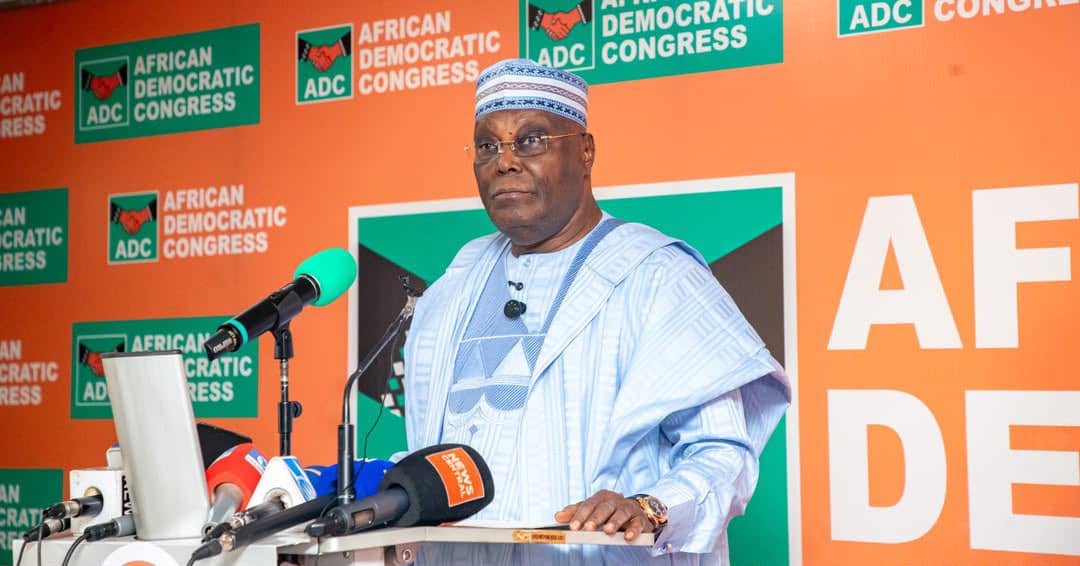
Former Vice President and African Democratic Congress (ADC) presidential candidate, Atiku Abubakar, has stated that a new SBM Intelligence survey highlights widespread dissatisfaction with the Federal Government’s petrol pricing policy and growing demand for relief from rising living costs.
Atiku made the submission in a statement issued by his Senior Special Assistant on Public Communication, Phrank Shaibu, while reacting to findings from the second wave of the Nigeria 2027 Voter Sentiment Tracker, titled Nigeria 2027: A Narrower Race.
According to the survey, 67.4 per cent of respondents said they want the petrol subsidy restored, while 19.2 per cent supported the current policy direction. Petrol also emerged as the second-most cited national concern, accounting for 18.2 per cent of responses, and received a performance rating of 1.69 out of four, the lowest among the policy issues assessed in the survey.
The SBM Intelligence survey was conducted through face-to-face interviews with 1,103 eligible voters across 12 states and the Federal Capital Territory, covering Nigeria’s six geopolitical zones. SBM cautioned that the findings represent a snapshot of the views of those surveyed and are not a projection of the eventual 2027 election outcome or the views of every Nigerian voter.
Atiku: Fuel policy has increased economic pressure
Reacting to the findings, Atiku said the 67.4 per cent figure demonstrates the extent of public dissatisfaction with the impact of the current petrol pricing regime.
“This survey is no longer merely about economic policy. It has become a democratic question. When an overwhelming majority of Nigerians declare that a government policy is destroying their lives, responsible leadership must listen,” he said.
Atiku argued that rising petrol and transportation costs have placed additional pressure on households, workers, farmers and businesses, saying the consequences of the policy have been felt through higher living costs and declining purchasing power.
He said the survey reflects concerns already being experienced by Nigerians who depend on petrol for transportation, farming, small businesses and other daily economic activities.
Petrol concerns highest among rural respondents and in two southern zones
The SBM Intelligence findings also indicate significant differences in how petrol-related concerns are distributed across the country.
Petrol was identified as the primary concern by 32.4 per cent of rural respondents, compared with 11.7 per cent of urban respondents. The issue ranked first among respondents in the South-West, at 30.5 per cent, and the South-South, at 29.1 per cent.
The survey also showed that priorities vary across Nigeria’s geopolitical zones. Insecurity remained the leading concern in the South-East and North-Central, while debt was the leading concern in the North-East.
Atiku said the regional and settlement-level figures showed that the debate over petrol pricing and affordability cuts across different parts of the country.
Atiku criticises Tinubu administration’s approach
The former Vice President accused the President Bola Ahmed Tinubu administration of removing the petrol subsidy without putting sufficient measures in place to cushion the resulting impact on households and businesses.
According to Atiku, the government should have given greater attention to domestic refining, affordable mass transportation, wage protection and support for small and medium-sized businesses affected by higher energy costs.
“President Tinubu removed subsidy with a slogan, not a strategy,” Atiku said, adding that Nigerians had been warned about the potential consequences of removing the subsidy without adequate safeguards.
He also criticised the government’s messaging around economic indicators and its Compressed Natural Gas (CNG) programme, arguing that macroeconomic gains would have limited meaning for citizens if households continued to struggle with the cost of transportation, food and energy.
“Nigerians do not eat GDP figures. A mother cannot take FAAC allocations to the market. A worker cannot fuel his vehicle with presidential promises,” he said.
Atiku unveils proposed petroleum subsidy alternative
Atiku said his proposed alternative would not involve a return to the previous subsidy arrangement, which he described as lacking transparency.
Instead, he proposed what he termed a transparent production subsidy for petroleum products refined in Nigeria and sold to Nigerians.
Under the proposal, Atiku said imported petroleum products would not qualify for the subsidy, while the programme would operate with a fixed spending limit, approval by the National Assembly and independent audits.
He said the objective would be to reduce petrol prices, encourage domestic refining, support job creation and restore household purchasing power.
“If elected, from May 29, 2027, I will introduce a transparent production subsidy for petroleum products refined in Nigeria and sold to Nigerians,” he said.
The proposal comes amid an intensifying political debate over the future of petrol pricing, subsidy policy and measures to reduce the cost of living ahead of the 2027 general elections.
Atiku calls for immediate relief
Atiku called on the Federal Government to take steps to reduce the economic burden facing Nigerians during the remainder of the administration’s tenure.
He said the latest SBM Intelligence findings should prompt policymakers to pay closer attention to public concerns over petrol prices, transportation costs and household affordability.
The former Vice President maintained that government economic policy should combine fiscal responsibility with measures designed to protect vulnerable households and encourage domestic production.
“The people have spoken,” Atiku said, arguing that the SBM findings reinforce the case for what he described as a different approach based on production, protection and affordability.
Leave a reply
Recent Post





Comments (8)
виртуальная девушка 18
13 Oct, 2026 at 12:24 PMТакие ресурсы для совершеннолетних способны служить инструментом сексуального просвещения. Подобные ресурсы помогают людям безопасно изучать собственные предпочтения и фантазии. <a href="https://erostoryai.com">erostoryai.com</a> Для пар общий просмотр может служить причиной для откровенного диалога о потребностях. Кроме того подобные ресурсы помогают снимать психологическое стресс и укреплять психическое благополучие.
channelfanbase.co.uk
12 Oct, 2026 at 10:09 PMEnjoying films in a movie theater is significantly more enjoyable than streaming them at home. The big display and surround audio deliver a truly cinematic experience. <a href="https://channelfanbase.co.uk/">horror movies</a> Viewers can fully concentrate on the story without interruptions like texts. Additionally, the shared energy of laughing together renders the film more enjoyable.
RikeSeve
08 Oct, 2026 at 07:03 AMНа этом ресурсе есть шанс получить ценную информацию. https://e-transavto.ru/read/vozdeystvie-ekologichnykh-materialov-na-sovremennuyu-modu-513/
RikeSeve
06 Oct, 2026 at 05:36 PMНа данном сайте есть шанс обнаружить нужную информацию. https://wolgograd.ru/column/2998-zaporozhskaya-veterinarnaya-sluzhba-vooruzhilas-mobilnymi-kompleksami-dlya-neytralizatsii-bio-ugroz/
RikeSeve
06 Oct, 2026 at 05:04 PMЗдесь ресурсе есть шанс почерпнуть интересную информацию. https://labdiz.ru/full/549-kaliningradskaya-oblast-postavila-100-tonn-rybnogo-korma-v-tri-regiona-rossii.htm
Williamcipse
30 Sep, 2026 at 12:50 PMИИ-агенты представляют собой программные инструменты, которые могут осуществлять операции без непосредственного участия пользователя. Они характеризуются умением обучаться с помощью информации и принимать автономные решения. Подобные решения повсеместно используются в различных сферах, например обслуживание пользователей, оптимизацию рабочих процессов, персональных помощников и исследовательские проекты. https://ai-m.ru/aimonitor-pokazyvaet-pochemu-ii-vybiraet-konkurentov.html Их преимуществами выступают значительная эффективность функционирования, круглосуточная работоспособность и возможность обрабатывать огромные количества информации. В будущем подобные технологии окажутся более автономными и умными, что создаст новые горизонты для бизнеса.
RikeSeve
30 Sep, 2026 at 03:18 AMТут портале можно отыскать ценную информацию. https://brunet-ka.ru/style/2026-06-02-istoriya-sozdaniya-onlayn-kazino-sweet-ot-idei-do-mezhdunarodnogo-brenda.html
RikeSeve
29 Sep, 2026 at 10:42 AMЗдесь портале вы сможете найти важную информацию. https://nashipesni.ru/pub/2026-06-01-sokrovishcha-ryazantsev-bankovskie-vklady-prevysili-385-mlrd-rubley/