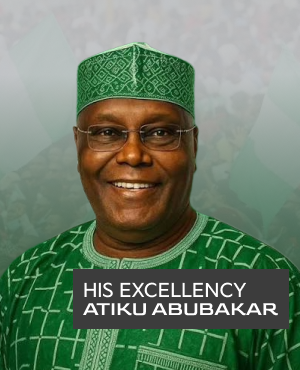
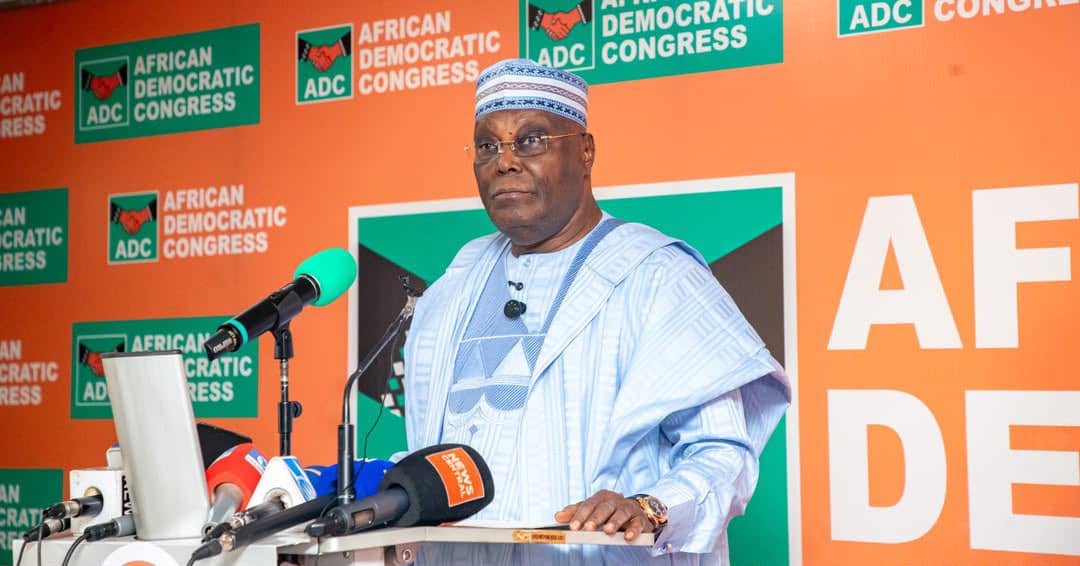
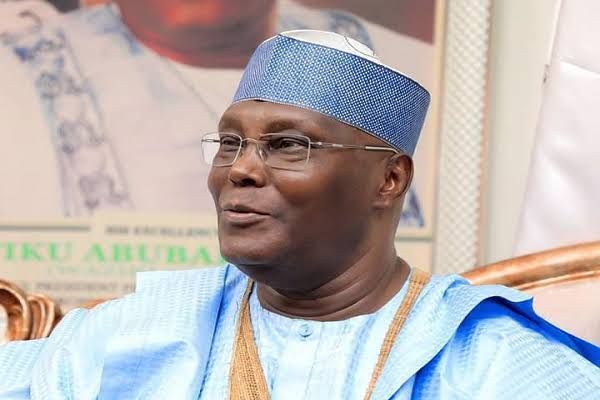
Former Vice President and African Democratic Congress (ADC) presidential candidate, Alhaji Atiku Abubakar, used Nigeria’s 66th Independence anniversary to challenge President Bola Ahmed Tinubu’s assessment of the country’s economic progress, arguing that headline economic indicators must ultimately translate into better living conditions for Nigerians.
In his State of the Nation address delivered at the ADC headquarters in Abuja on October 1, Atiku questioned the administration’s handling of the cost of living, fuel policy, insecurity and transportation. He also proposed a targeted domestic fuel subsidy and called for greater transparency and protection of citizens’ political freedoms.
Here are four key messages from the address.
1. “A growing government account is not a recovering Nigerian”
Atiku challenged the idea that rising government revenues, economic growth or improving inflation figures alone demonstrate that Nigerians are experiencing an economic recovery.
Responding to President Tinubu’s Independence Day message, in which the President said Nigeria had moved beyond the emergency phase of its reforms and was entering an era of shared prosperity, Atiku argued that the real test of recovery is what households can afford.
“A President may announce a new chapter in a speech. He cannot announce food onto a family’s table or money into a worker’s pocket.”
Atiku pointed to the rising cost of everyday essentials, including petrol and food, to argue that increases in nominal wages have not necessarily translated into stronger purchasing power.
His central question to the President was direct:
“Bola, where is this prosperity?”
For Atiku, economic progress must ultimately be visible in the market, at the filling station, in the workplace and at the family table—not only in official statistics.
2. “Calling relief an addiction will not lower the price of petrol”
Fuel subsidy removal was another central focus of Atiku’s address.
He argued that the removal of the petrol subsidy placed a heavy burden on households through higher fuel and transportation costs, while questioning what Nigerians had received in return for the savings the government said would accrue from the policy.
“Three years later, the pain has an address in every home. Bola, where is the benefit?”
As an alternative, Atiku proposed what he described as a capped, budgeted production subsidy tied specifically to fuel refined in Nigeria, including fuel produced by modular refineries.
Under the proposal, imported petrol would not qualify. He said the programme would be subject to published costs and independent auditing, with the benefit passed directly to consumers through lower pump prices.
“The principle is simple: produce here, refine here, create jobs here and pay less here.”
The proposal, as outlined by Atiku, is intended to support domestic refining while providing consumers with relief at the pump.
3. “A government that cannot make life affordable and cannot protect life has failed the two tests that matter most to its people”
Atiku placed insecurity alongside the cost of living as a central measure of government performance.
He spoke of communities displaced by armed groups, farmers unable to safely access their fields and families living under the threat of kidnapping and ransom demands. He argued that economic recovery cannot be separated from security because people cannot produce, trade or work normally when their lives and livelihoods are at risk.
“A farmer who cannot safely reach his field cannot wait for your theory of cheaper food.”
For Atiku, the connection is straightforward: policies aimed at increasing food production and reducing prices will have limited impact where insecurity prevents farmers from reaching their farms and disrupts communities.
He therefore argued that affordability and the protection of life should remain central measures of government action.
4. “Nigerians cannot board an announcement”
Atiku also challenged the Tinubu administration over its promise to reduce transport fares from October 1.
While acknowledging that lower fares on some routes would be welcome, he questioned whether the promised reduction was sufficiently broad to provide meaningful relief to commuters across the country.
“Before I forget, you promised Nigerians lower transport fares from October 1. Today is October 1. Did your promise miss the bus?”
Atiku called on the government to publish the routes covered by the reduction, the fares charged before and after the adjustment, and the number of Nigerians benefiting from the policy.
“Nigerians cannot board an announcement.”
His broader argument was that government promises should be accompanied by clear, measurable information that allows citizens to determine who is benefiting and by how much.
A call for accountability and measurable results
Across the four issues, Atiku’s central message was that Nigerians should judge government policies by their tangible effects on everyday life.
His address contrasted President Tinubu’s description of an economy moving towards prosperity with Atiku’s assessment that many households continue to face pressure from food, transport, energy and security costs. He also called for greater accountability in public spending, including clearer reporting on government programmes and expenditure.
As Nigeria marked 66 years of independence, Atiku argued that the country’s progress should ultimately be measured not only through macroeconomic figures, but by whether ordinary Nigerians can afford food, travel safely, access healthcare and education, and earn a livelihood with dignity.
For Atiku, the question is not simply whether government revenues and economic indicators are improving, but whether Nigerians can feel that improvement in their daily lives.
Leave a reply
Recent Post





Comments (1)
Dbpqdist Frvrs
18 Oct, 2026 at 11:49 PMQJYWllFAKnyxJHcNlLJnTJV